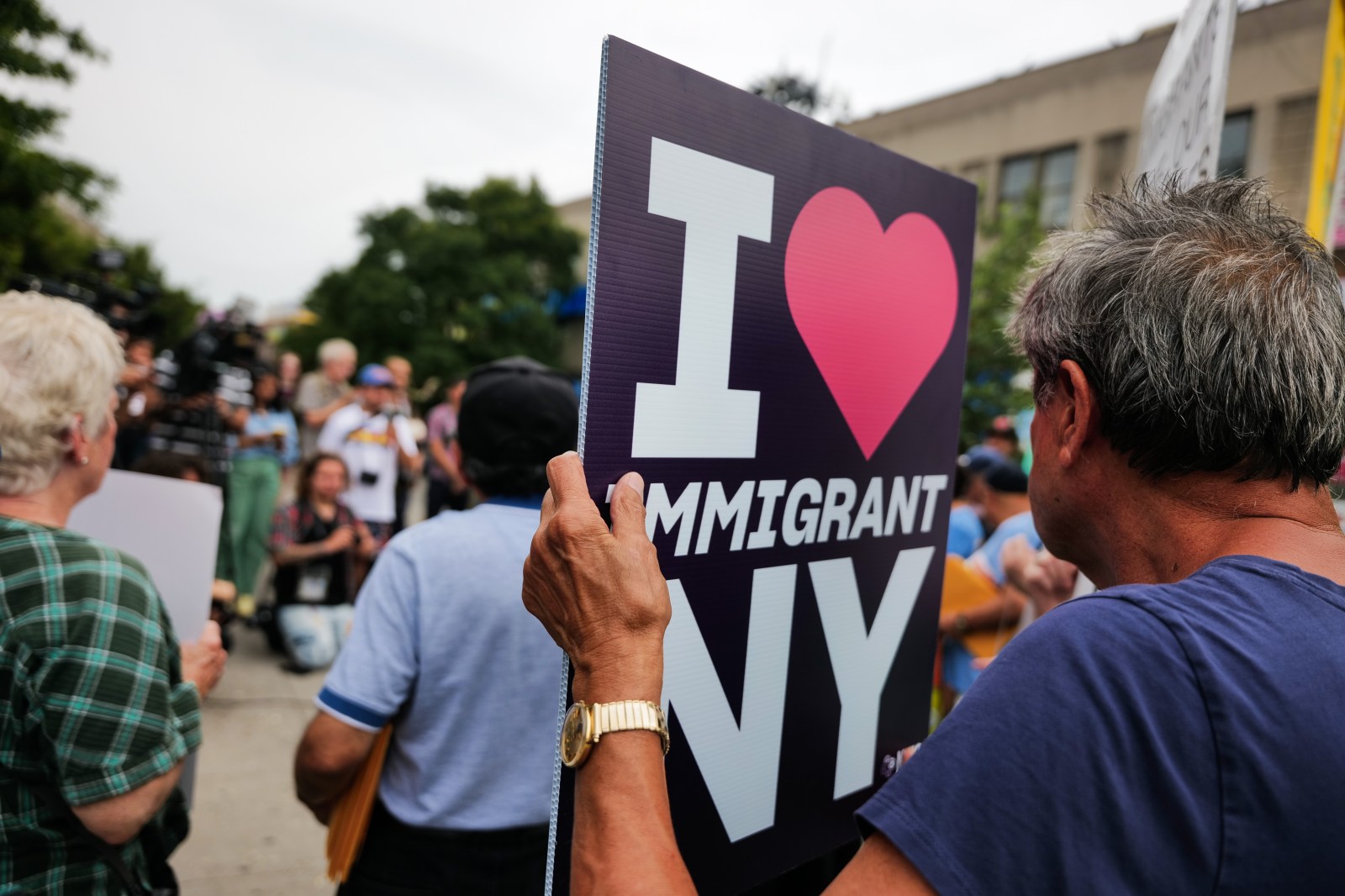
Police From GOP-leaning Counties Set To Fight Against New York ICE Law Rewrite the following news story as a viral, SEO-optimized article using HTML headings ( , , etc.) for all sections and sub-headings. Only output the article body. — A new law banning police and sheriff’s departments in New York from working with federal Immigration and Customs Enforcement (ICE) took effect Tuesday, facing immediate pushback from areas of the state that voted for President Donald Trump in 2024. The law—the Local Cops, Local Crimes Act—was signed by Democratic Governor Kathy Hochul in May. It prohibits local governments and law enforcement agencies from entering into, renewing, extending or remaining in so-called 287(g) agreements with ICE. Most of the localities that entered into those agreements are in areas that backed Trump’s White House bid. “Any police department or sheriff’s office that disobeys this law that maintains any agreement with ICE will face legal action,” Hochul said at a press conference on Tuesday. The law has drawn praise from immigrant-rights advocates and sharp criticism from some county leaders and sheriffs, several of whom have argued that such agreements with federal agencies can help identify criminals in local custody and improve cooperation. Multiple agencies that have complied with the ban have come together to fight the new law in court. “Although I must comply with this law while it remains in effect, I will not remain silent about its hypocrisy or its consequences,” Cattaraugus County Sheriff Eric Butler told Newsweek. “Today, I am joining 21 other New York sheriffs in filing suit against Governor Kathy Hochul and Attorney General Letitia James to challenge the State’s action. “Compliance is not agreement, and it is not surrender,” Butler said. What Is a 287(g) Agreement? The federal 287(g) program allows ICE to delegate certain immigration enforcement powers to state and local law enforcement agencies through formal agreements. The program was created under the Illegal Immigration Reform and Immigrant Responsibility Act of 1996. Under ICE’s current framework, agreements generally fall into three categories: Supporters of the program argue that it helps remove people who pose public-safety threats. Opponents and critics say that the agreements divert local resources toward federal civil immigration enforcement and can undermine trust between immigrant communities and local police. In Trump’s second stint in the Oval Office, the number of agencies joining the program has soared, particularly in Republican-leaning areas. Because local police and sheriff’s departments have not worked with the federal government, DHS said over 6,900 known illegal immigrants with criminal records or charges had been released rather than handed over to federal agents between January 20, 2025, and December 1, 2025. “Governor Hochul must stop putting politics above public safety. This type of insanity leads to more crimes and more innocent victims,” a DHS spokesperson told Newsweek on Tuesday. Hochul said Tuesday that the 287(g) ban would not affect whether criminals were turned over to ICE, telling reporters that police would assist federal agents “only if a real crime has been committed. But on civil immigration matters, ICE is on their own.” Which New York Agencies Were Participating? Records reviewed by Newsweek show that county sheriff’s offices and police departments in several parts of New York had entered into 287(g) agreements before the state ban took effect. The New York Attorney General’s office identified 12 agencies as having agreements affected by the law, while ICE records show active agreements in eight instances across five counties as recently as August 2026. Newsweek contacted affected law enforcement agencies for comment Tuesday morning. Among the agencies identified were: ICE records indicate Nassau, Niagara, Steuben, Cattaraugus and Rensselaer had agreements including task-force, warrant-service and jail-enforcement arrangements. Butler said that the new state law would not stop his department or others from cooperating with ICE, including locating known individuals with valid criminal arrest warrants. Steuben County Sheriff James Allard told Newsweek that the change would mean departments would not be reimbursed by DHS for protecting federal agents and citizens, adding, “It is a political platform during a reelection year and does nothing to keep our citizens safer.” Otsego County Sheriff Richard J. Devlin Jr. was also defiant in his message, telling Newsweek, “My oath is to the people of this county—not to politics or an agenda. I will enforce the law, protect our communities, and always put public safety first.” Many Participating Counties Lean Republican Many of these counties favored Trump in the 2024 election, some of them heavily. Trump carried Cattaraugus County with roughly 66 percent of the vote, Steuben County with nearly 66 percent, Niagara County with about 57 percent and Nassau County with just over 51 percent. Rensselaer County was the exception among some of the highest-profile jurisdictions, narrowly backing then-Vice President Kamala Harris, but the county’s leaders have taken a strong stance against Hochul’s ban. “We have yet to hear the Governor or Attorney General tell us how their action makes our state or Rensselaer County any safer. We are still waiting for an answer to that important question,” Rensselaer County Sheriff Kyle Bourgault said in a statement shared to Facebook Monday. “As Sheriff, I am party to this legal action and submitted an affidavit in support. I believe that when the facts of this case are heard and the political arguments are set aside, we will prevail.” What Happens Next? The key question now is whether courts will allow the move to stand. Rensselaer County officials have already announced plans to challenge the law and argue that cooperation agreements with ICE help local authorities identify dangerous offenders and improve public safety. Hochul and Democratic Attorney General Letitia James have countered that local police resources should remain focused on local crimes rather than federal civil immigration enforcement. “No county executive should think that they are above the law in the state of New York,” Hochul said Tuesday. The legal dispute could offer a significant test of how far states can go in restricting local participation in federal immigration initiatives. While the federal government cannot generally compel states to carry out immigration enforcement duties, states often have broad authority to regulate the conduct of their own agencies and political subdivisions. If the law survives judicial scrutiny, New York will become one of the most prominent examples of a state explicitly prohibiting local participation in the 287(g) program. If the counties prevail, some agencies could seek to restore agreements with ICE and resume participation in federal immigration enforcement programs. Contact Newsweek editors on this story: Jason Lemon and Geoffrey Rowland. Source: WorldNewsAPI | Read original
